Drivers of the Roadmap
Several structural factors shape Pennsylvania’s approach to nuclear energy development. Nuclear systems require long planning horizons and coordination across many actors. Progress depends on aligning expertise from industry, labor, universities, government, and nonprofit organizations. This roadmap organizes stakeholders around shared priorities rather than prescribing specific projects or technologies.
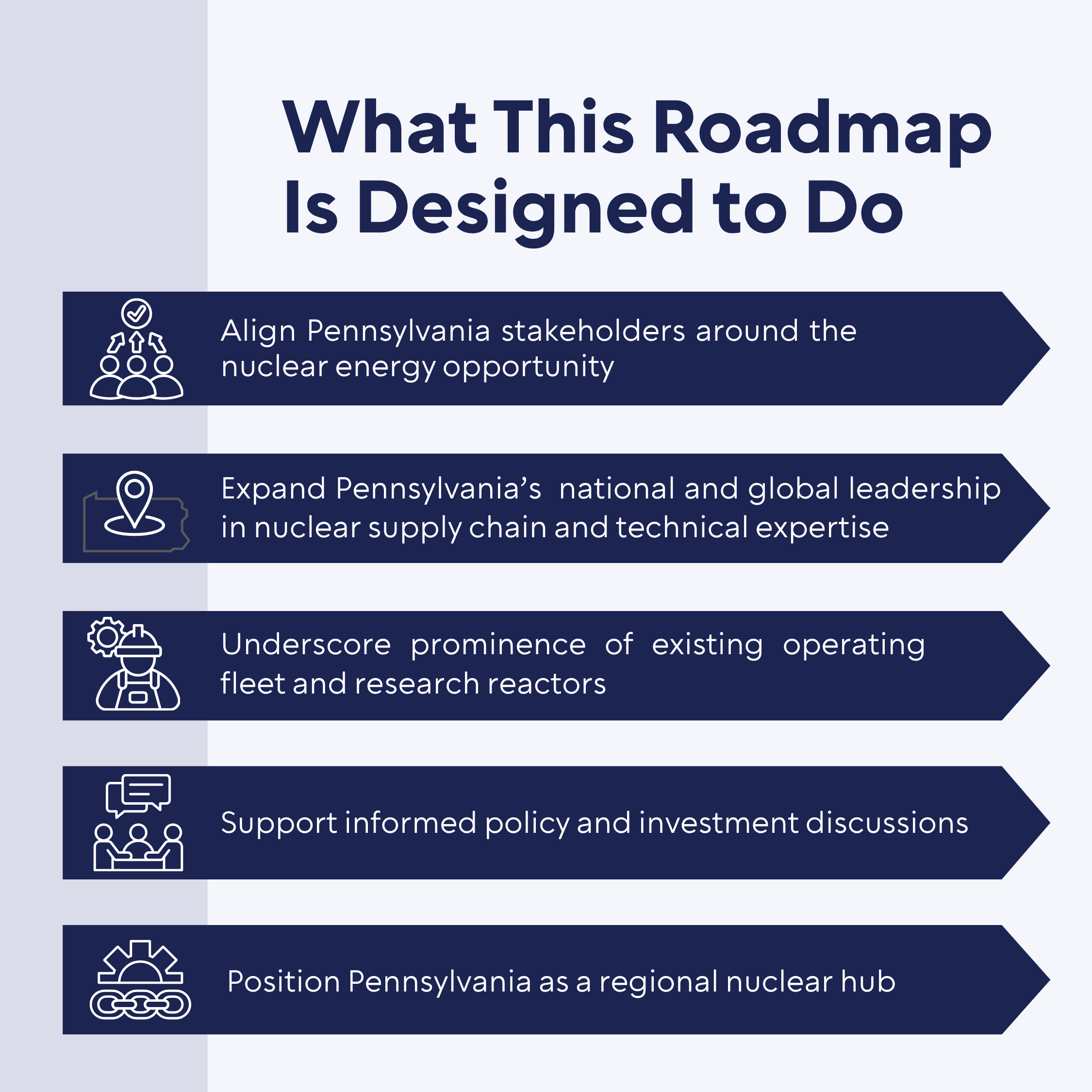
This moment creates a need for alignment. Interest in nuclear energy is expanding as electricity demand grows and reliable power becomes more valuable to the economy. Nuclear generation provides firm electricity that can support grid reliability as demand increases. States with established capabilities have an opportunity to participate in this expansion. Realizing that opportunity requires coordination across organizations that influence energy infrastructure, industrial development, and talent preparation.
Team Pennsylvania serves as a neutral convener. The commonwealth’s nuclear ecosystem includes plant operators that sustain the existing fleet and manufacturers that produce specialized components. Universities advance research and educate engineers and technicians who support the industry. Policymakers shape the regulatory and economic environment while labor organizations represent the skilled talent required for construction and operations. By connecting these communities, Team Pennsylvania helps align efforts around shared opportunities.
The roadmap prioritizes Pennsylvania’s core nuclear capabilities. The most durable opportunity for the commonwealth lies in reinforcing the assets that already support nuclear energy. These assets include the existing fleet that anchors technical expertise, the industrial supply chain that produces nuclear components, and the talent base that supports operations and construction. Strengthening these foundations allows Pennsylvania to participate in nuclear development across the region while sustaining economic value within the state.
Nuclear development operates within a broader national and regional system. Federal institutions govern reactor licensing and safety oversight. Regional electricity markets influence investment decisions and grid planning. Global supply chains affect the availability of specialized materials and components. Pennsylvania cannot control these systems, but it can position itself effectively within them by strengthening industrial capacity and improving coordination across institutions.
This roadmap will evolve through continued collaboration. The framework reflects current knowledge and stakeholder input. As technologies advance and market conditions change, continued engagement across Pennsylvania’s nuclear ecosystem will allow the roadmap to adapt and remain useful over time.
◄ Vision and Strategic Goals (by 2050) | National, Regional, and Pennsylvania Context ►