Long-Term Strategies (2025–2050)
The long-term strategies build from the nuclear visions and define how Pennsylvania will translate ambition into coordinated action through 2050. Together, these strategies focus on sustaining and integrating the existing nuclear fleet, enabling deployment and national leadership, preparing communities and talent, and aligning capital to support long-term investment. This approach reflects a unique moment of alignment between federal ambition, industrial demand, and Pennsylvania’s strengths in energy leadership, manufacturing, research, and talent. By leading across these dimensions, Pennsylvania can scale nuclear energy to support economic growth, energy security, and resilience over the coming decades.

Bolster Nuclear Ecosystem
Nuclear energy is a cornerstone of Pennsylvania’s reliability and competitiveness, supporting the vision of a state that leads in energy security and long-term economic growth. Modernizing and sustaining the existing fleet is central to this strategy. Targeted upgrades can extend reactor life and performance well into 2050, while evaluations of potential repowering or restart opportunities can add capacity without the long lead time associated with new construction.
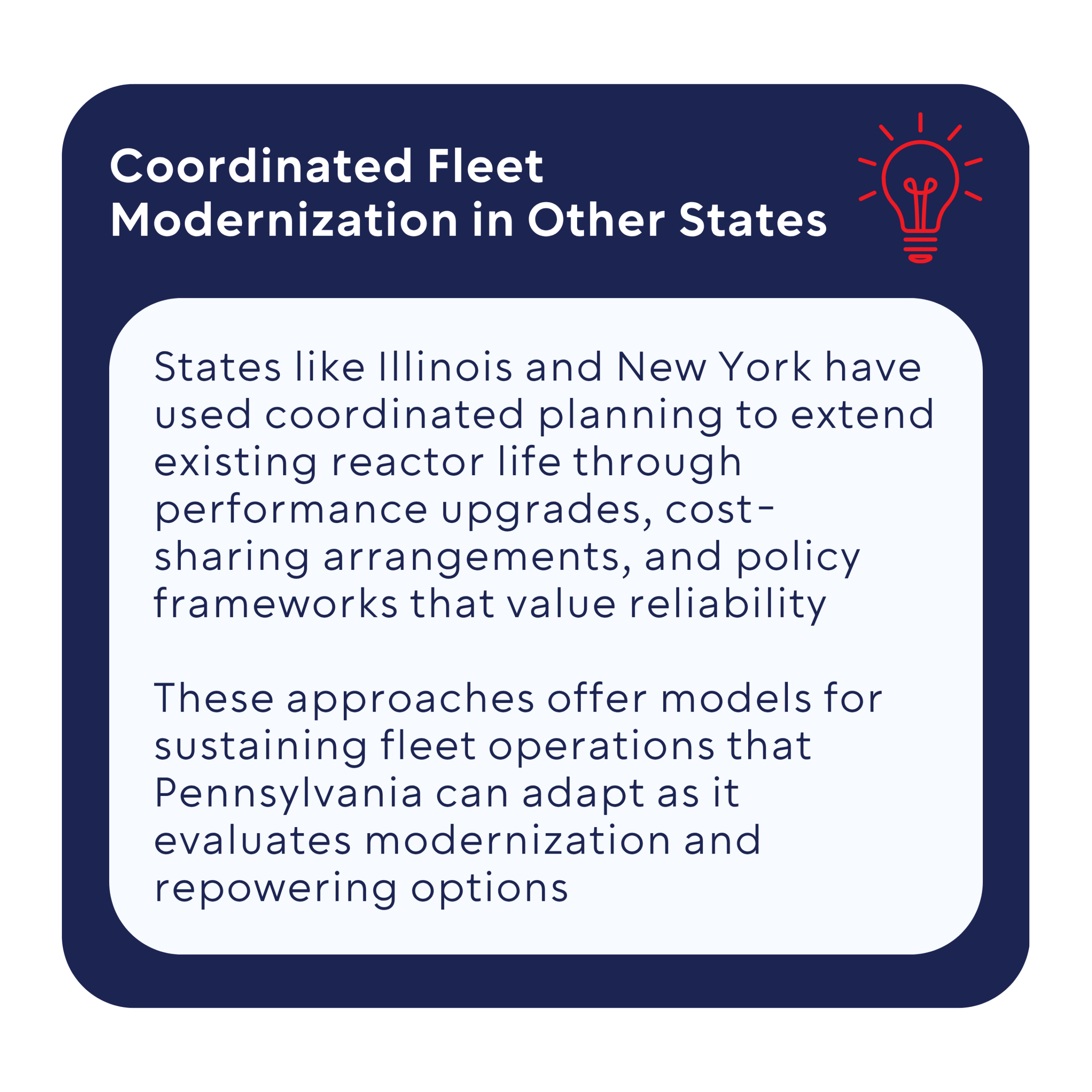
As Pennsylvania modernizes its energy systems, industrial suppliers will play a critical role in supporting safe, reliable operations. This opportunity includes both established nuclear vendors and manufacturers with relevant industrial capabilities that can support maintenance, component replacement, and system upgrades. Helping these firms understand qualification requirements and pursue nuclear-grade certification pathways can broaden supply chain participation while reinforcing longevity of the existing fleet. Coordinating these efforts with fleet modernization planning strengthens reliability and creates durable economic benefits for manufacturing communities across the commonwealth.
Grid readiness is essential to sustaining and expanding nuclear’s role in Pennsylvania’s energy system. Transmission capacity, interconnection, and system operations must support both extended operation of the existing fleet and the integration of new nuclear power generation as it comes online. Siting decisions should align with available grid capacity, while statewide planning should reflect projected growth in energy demand. Aligning grid planning with federal deployment ambitions will help Pennsylvania participate in demonstration cycles and regulatory coordination efforts. As new nuclear capacity is added, complementary technologies such as storage, industrial electrification, or thermal integration can improve system efficiencies and strengthen reliability. Continued investment in transmission and related infrastructure will support reliable power delivery, enable future deployment, and reinforce broader economic growth.

Advance Deployment and Technology Leadership
Pennsylvania can play a leading national role in advancing next-generation nuclear technologies from early projects to scalable deployment. That role is not limited to where facilities are ultimately built. It rests on Pennsylvania’s ability to support deployment nationally by providing the industrial capacity, technical expertise, and problem-solving capability required to move projects from concept to operation.
Early preparation enables disciplined progress. When sites are evaluated in advance and communities understand potential development pathways, technology decisions can be aligned more closely with system needs and long-term objectives. As advanced reactors mature, this alignment helps reduce uncertainty and ensures lessons from early projects translate into smoother execution over time.
Pennsylvania can play a significant role in accelerating reference plants across the country by supporting deployment efforts in other states through its supply chain strengths, research capabilities, and talent. As developers advance first-of-a-kind and early commercial units, Pennsylvania’s competitive advantages in metals, machining, fabrication, engineered systems, and industrial equipment manufacturing position the commonwealth as a reliable contributor to reactor component production. The state’s depth in advanced manufacturing enables firms to adapt existing capabilities to nuclear requirements and scale production as demand grows. By helping suppliers pursue nuclear-grade qualification and participate in multi-state procurement efforts, Pennsylvania can reduce risk for utilities and developers leading early deployments while reinforcing its role as a trusted contributor to the national and global nuclear ecosystem.
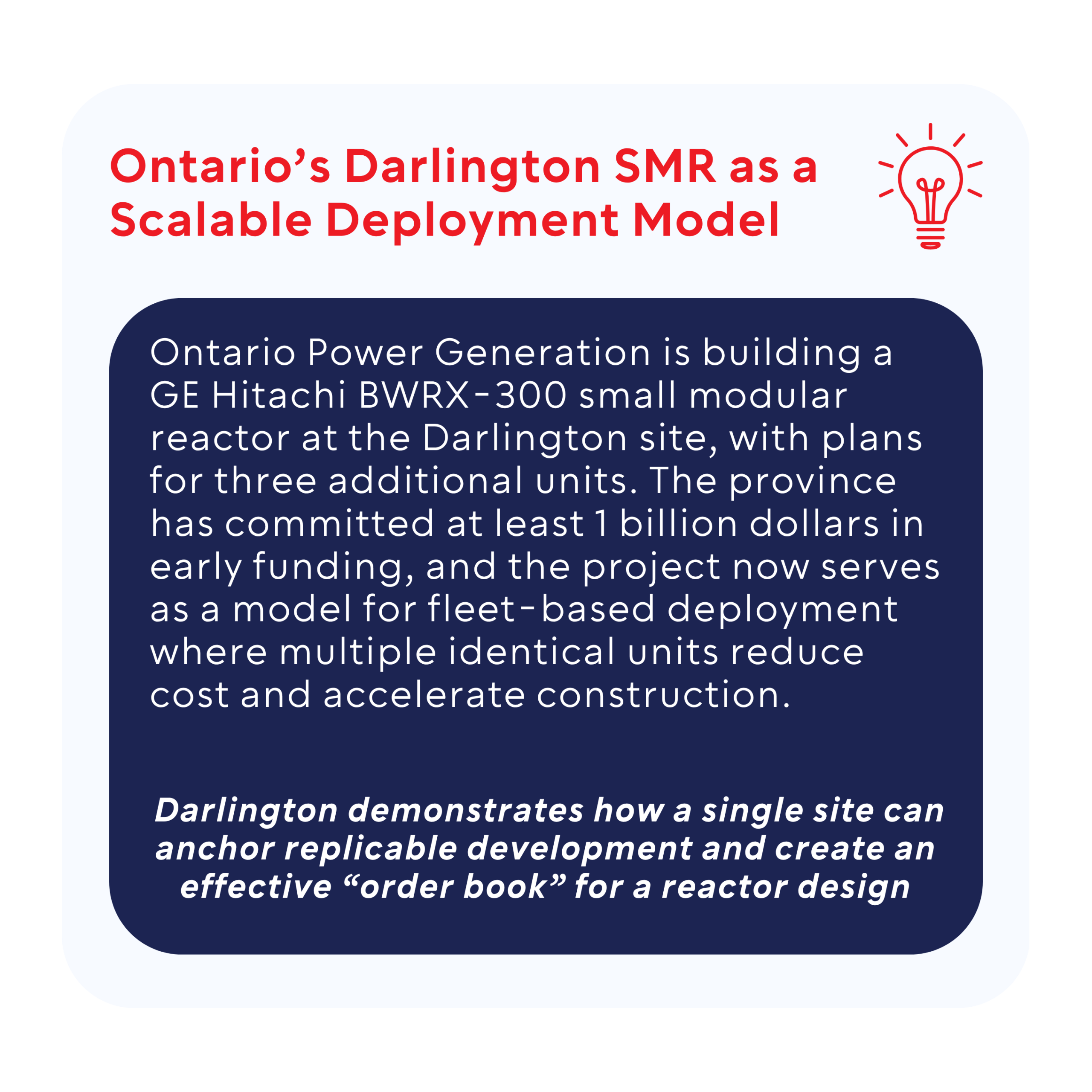
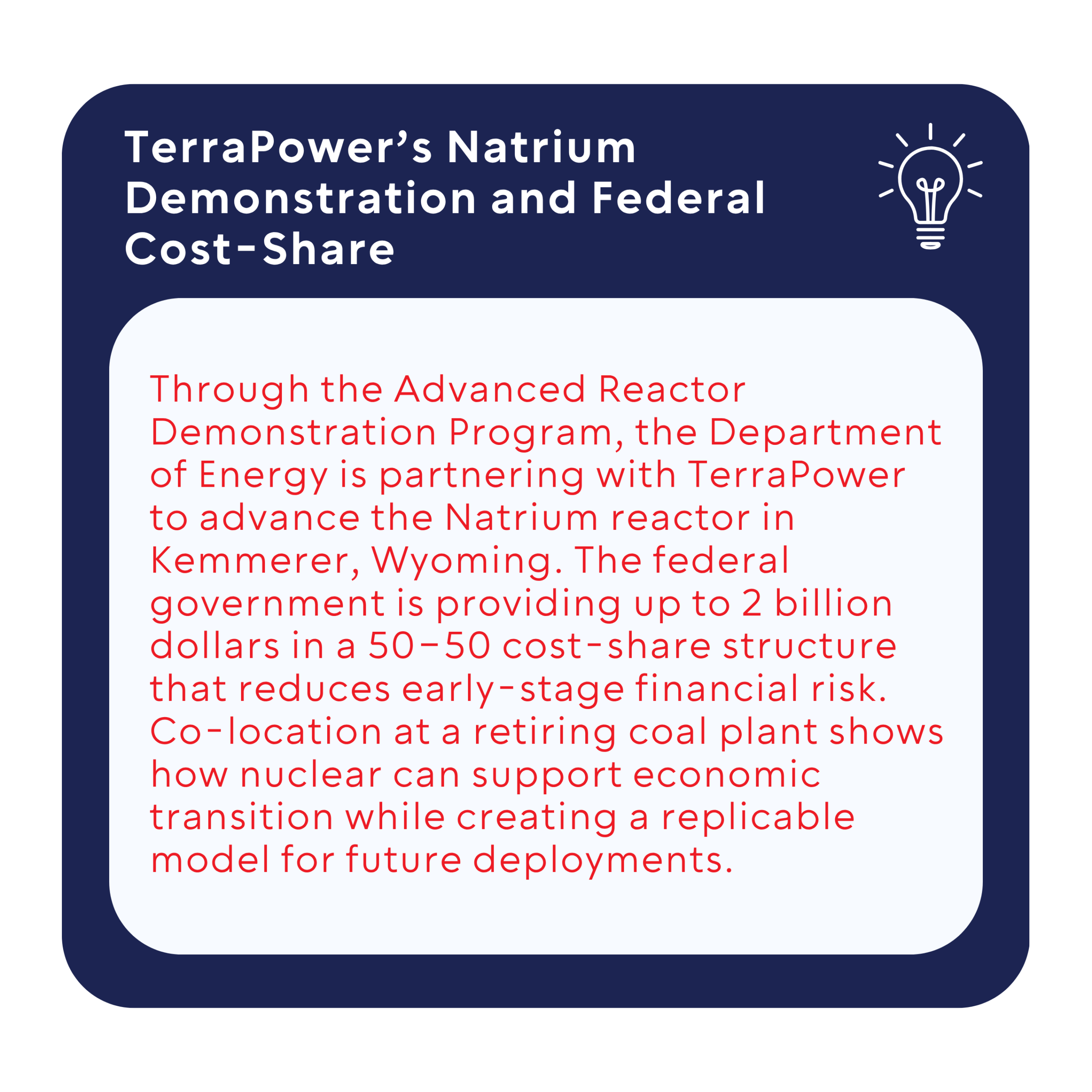
Federal alignment shapes the pace and sequence of deployment. Licensing pathways, demonstration programs, and financing windows establish how projects advance nationally. When state actions are coordinated with these timelines, Pennsylvania is better positioned to contribute meaningfully through supplier readiness, applied research, and development activity that aligns with federal priorities. Regional coordination further strengthens this approach by enabling shared learning and reinforcing momentum across state lines.
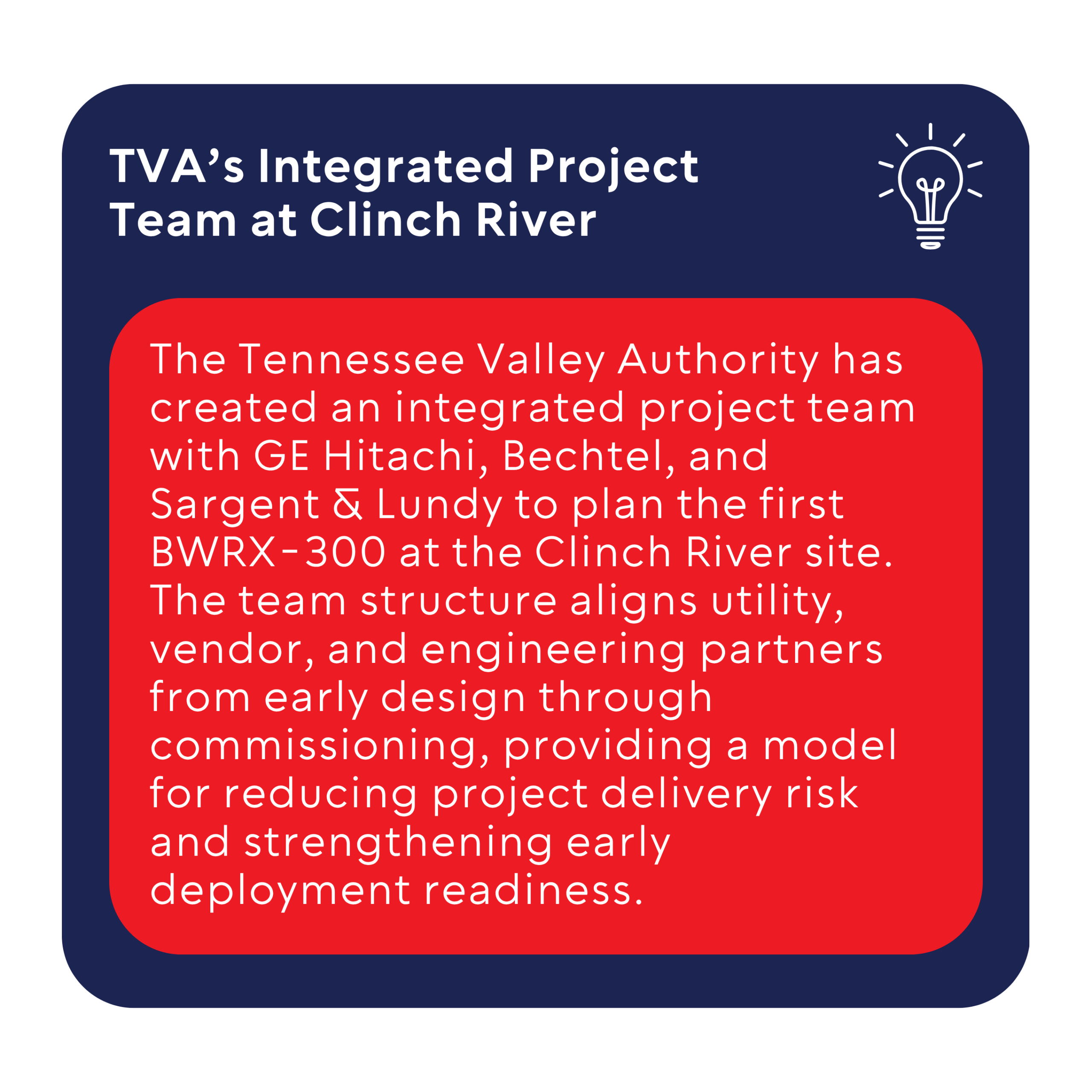
Research and validation anchor credibility as deployment accelerates. Universities, EPRI, national laboratories, and industry partners provide applied insight that helps resolve technical challenges and validate performance. When research remains closely connected to deployment experience, innovation moves more quickly from promise to practice. Through this strategy, Pennsylvania can help advanced nuclear technologies transition from early demonstrations into scalable solutions.

Strengthen Community Capacity and Talent Pipeline
For nuclear energy to deliver lasting value in Pennsylvania, communities and talent systems must be ready to grow alongside investment. Community readiness shapes how projects move from concept to reality and influences both timing and public confidence. Talent readiness determines whether those projects can be delivered and sustained over time. Addressing community capacity and talent pipelines deliberately better positions Pennsylvania to turn long-term strategy into durable results.
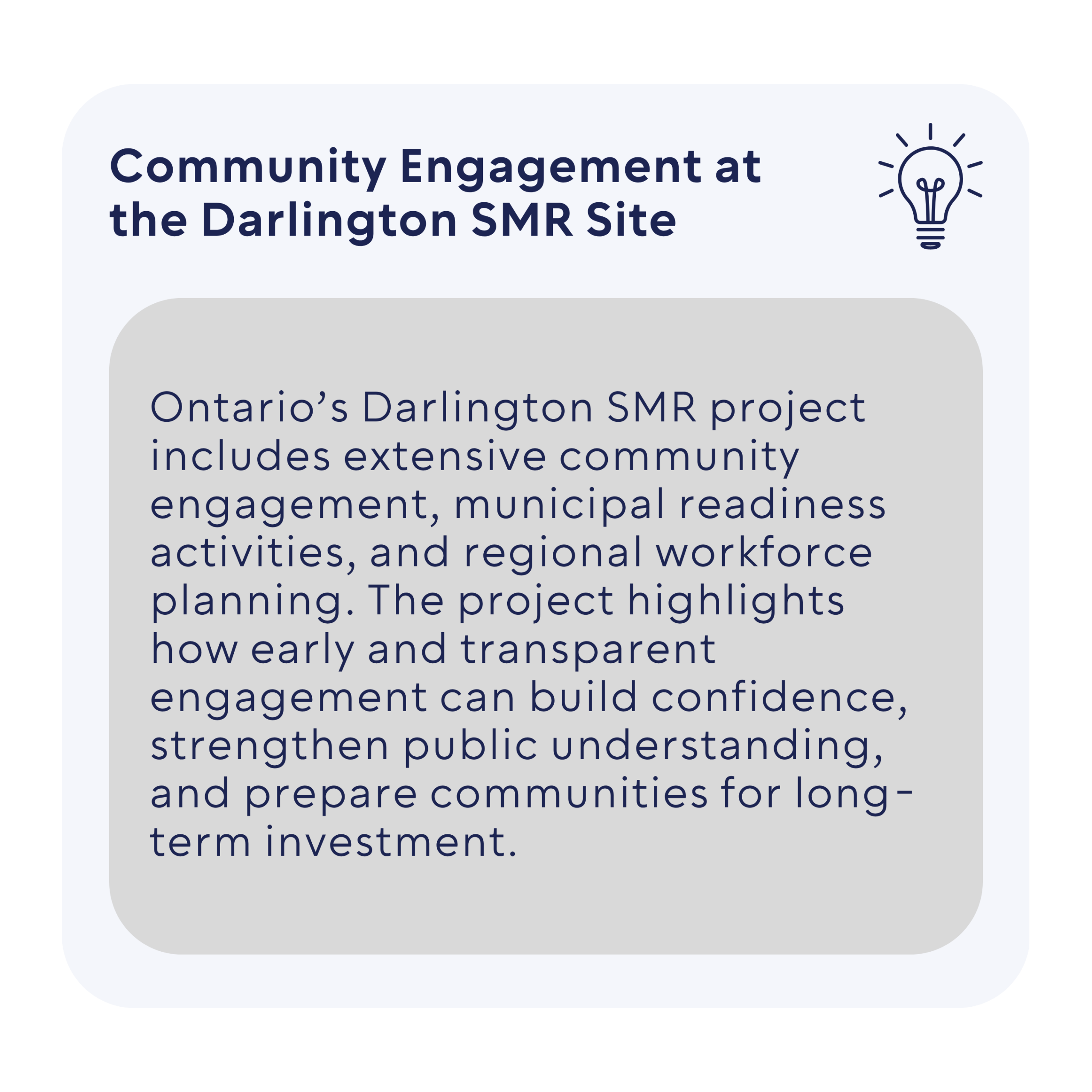
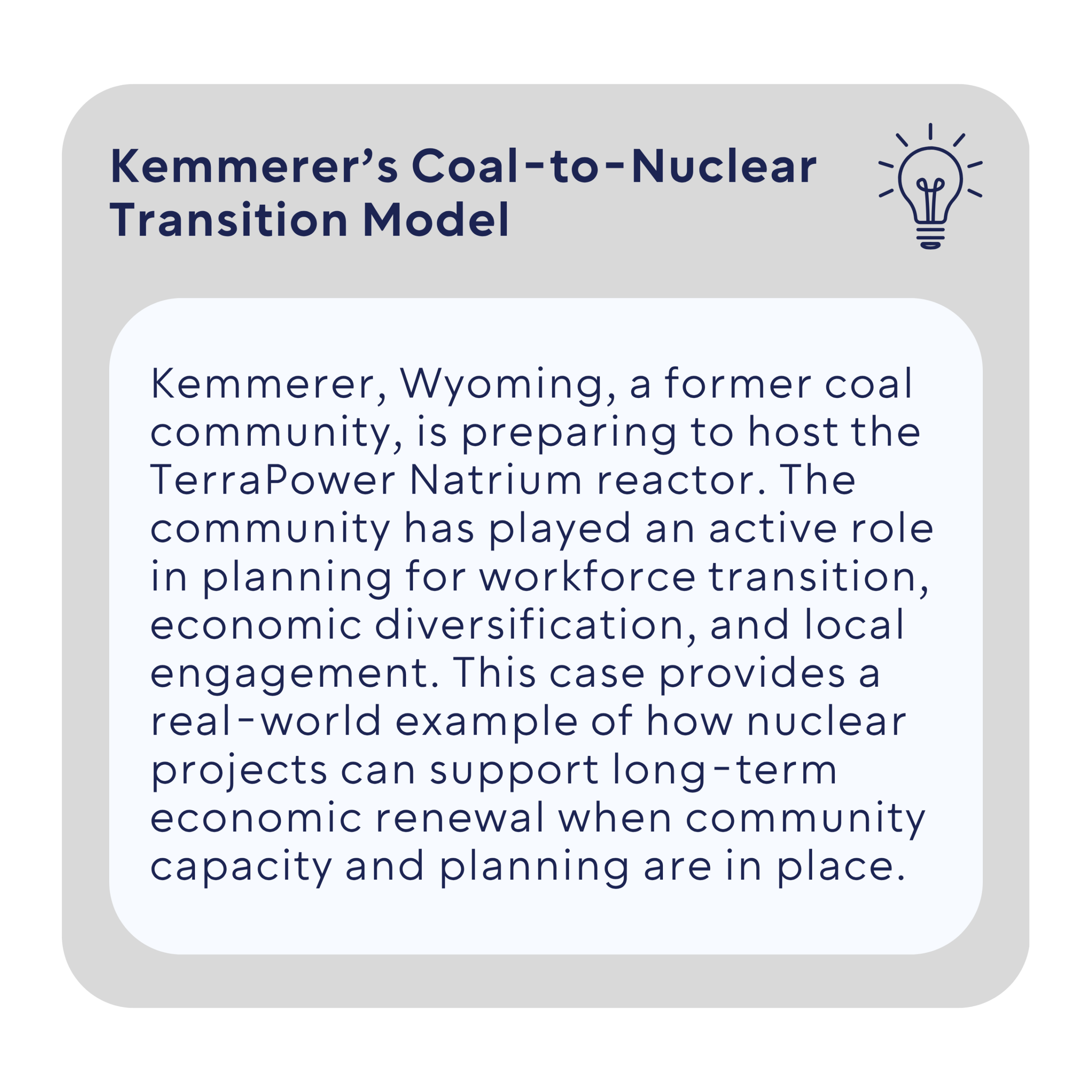
Communities play an active role in shaping how nuclear development unfolds. Local leaders must be able to evaluate opportunities, understand long-term implications, and participate meaningfully in early planning. When communities have access to practical guidance and trusted information, they are better equipped to navigate infrastructure needs and regulatory processes. That preparation leads to clearer expectations, more predictable siting decisions, and stronger confidence among residents and project partners alike.
Talent readiness presents a parallel challenge that unfolds over decades rather than project cycles. Nuclear energy depends on continuity over time, with skills developed, retained, and renewed as systems operate and change. When talent preparation does not keep pace, pressure builds across schedules and costs, weakening confidence in delivery. Approaching talent development as a sustained investment allows Pennsylvania to support reliable operations and maintain momentum as nuclear activity grows. The Nuclear Workforce and Education Roadmap under development by Penn State provides a strong basis for aligning future needs with training capacity. Its value lies in connecting projected demand to education and training systems in a way that supports long-term planning rather than short-term responses. When pathways are clearly linked to anticipated project timelines, institutions can scale with confidence and individuals can pursue stable, high-quality careers.
This strategy also supports economic transition across Pennsylvania. Many workers in energy, manufacturing, and industrial sectors already possess skills that translate well to nuclear-related roles. Creating visible pathways for advancement supports long-term opportunity by building on strengths communities and its residents already possess. By investing in community capacity and a future-ready talent pipeline, Pennsylvania can ensure that nuclear development is not only technically achievable but socially durable. This approach reinforces the success of fleet modernization, deployment leadership, and capital alignment by ensuring that people and places are prepared to participate and benefit over the long term.

Mobilize Capital for Long-Term Nuclear Investment
Pennsylvania’s nuclear ambitions through 2050 depend on how effectively capital is aligned with long-term objectives. Nuclear energy requires sustained investment over long time horizons, and success depends on financial structures that manage risk and provide clarity early in the development process. The purpose of this strategy is to create financial conditions that attract private investment while protecting ratepayers and reinforcing the strength of the existing fleet.
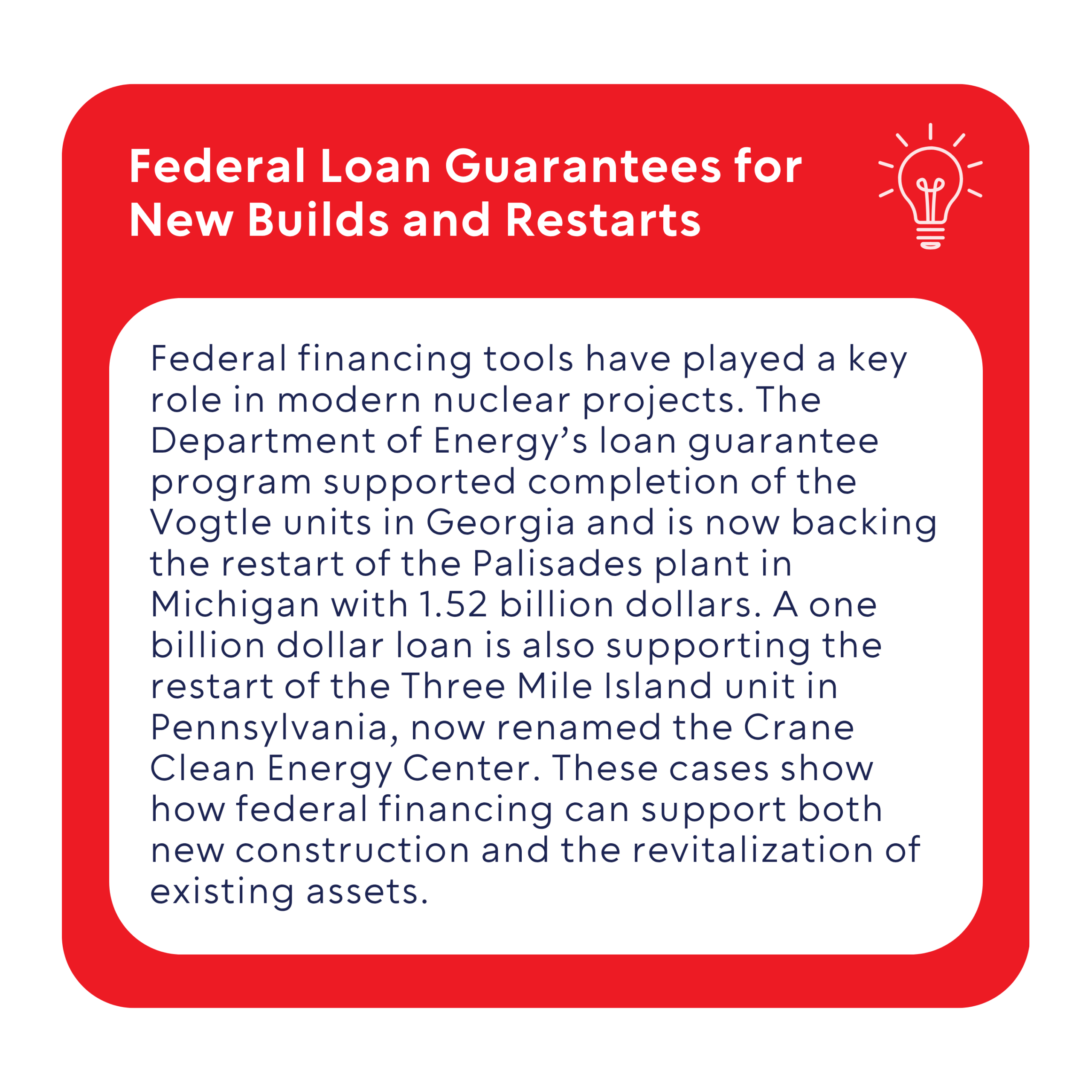
Federal funding opportunities are an essential part of this equation. Programs administered through the Office of Energy Dominance Financing and the Department of Energy are designed to reduce early financial risk and improve the ability of projects to secure private financing on reasonable terms. Pennsylvania’s advantage lies not only in accessing these programs, but in being ready when they open. Projects that are well sited, clearly permitted, and supported by consistent policy signals are far more likely to compete successfully for federal support. Aligning state actions with federal funding timelines increases the likelihood that Pennsylvania-based projects, suppliers, and talent programs are positioned to benefit.
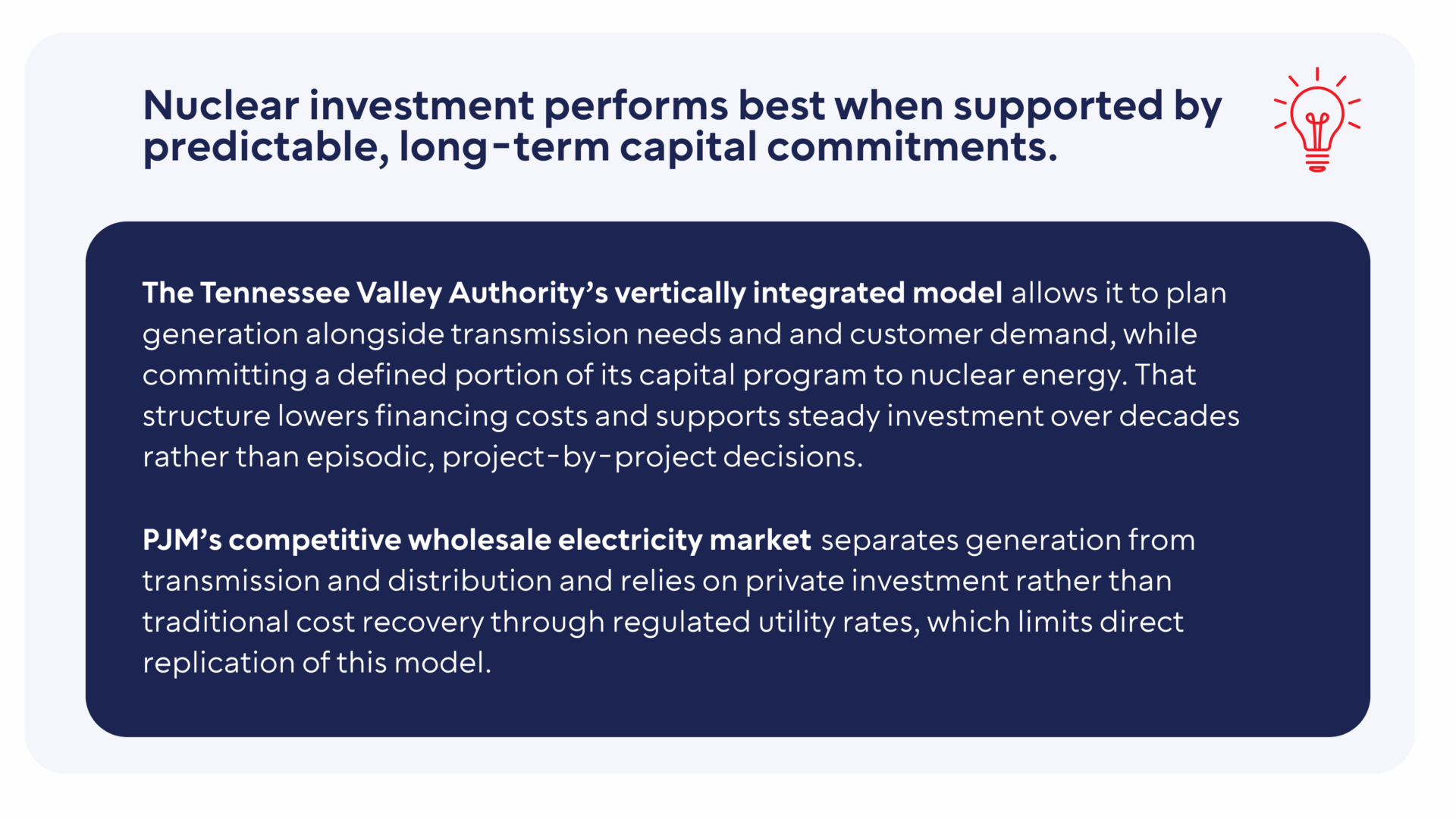
In Pennsylvania, regulatory clarity plays an outsized role in creating that predictability. Engagement with the Public Utility Commission and other oversight bodies shapes how risk is allocated and how costs are recovered. While construction work in progress recovery is limited in a competitive market, clear guidance around modernization investments, restarts, and long-term power contracts can still reduce uncertainty. When expectations are transparent, financing costs decline and investment decisions become more disciplined.
Financial alignment must also recognize that nuclear deployment extends beyond reactor construction. Manufacturing expansion, talent development, and site preparation often require capital well before a reactor project reaches a final investment decision. When these investments are coordinated rather than pursued in isolation, they reinforce one another and strengthen the overall business case. Pennsylvania’s role is to ensure that public tools complement private capital in a way that supports sequencing and scale.
By treating finance as a deliberate enabling strategy, Pennsylvania can attract long-term investment, safeguard its existing nuclear assets, and position itself as a credible partner in national nuclear deployment. Predictability, discipline, and coordination will be central to achieving that outcome.
Positioning Pennsylvania for 2050
Together, these strategies chart a long-term course for Pennsylvania to lead the nation in nuclear energy through 2050 and beyond. By sustaining and modernizing the existing nuclear fleet as a cornerstone of grid reliability, the commonwealth anchors reliability today while creating the conditions for continued innovation over time.
This roadmap also looks beyond infrastructure to people and places. It aligns growth with local capacity so communities are prepared to participate and benefit as nuclear development advances. By connecting talent readiness and economic opportunity for long-term nuclear planning, Pennsylvania can ensure progress is shared and durable across regions with deep energy and industrial roots.
With clear direction and sustained coordination, Pennsylvania can reduce risk, attract long-term investment, and strengthen its role in the national nuclear landscape. This approach positions the commonwealth not only to meet future energy needs, but to define what responsible, community-centered nuclear leadership looks like in the decades ahead.