Nuclear Energy in Action – Real Benefits for Pennsylvanians
Pennsylvania is uniquely positioned to meet the rapidly growing electricity demand driven by artificial intelligence, cloud computing, advanced manufacturing, and defense-related technologies. Nuclear energy already anchors the commonwealth’s power system, supplying roughly one-third of all electricity generated statewide and more than 90 percent of Pennsylvania’s carbon-free power. As the nation’s second-largest nuclear-producing state, Pennsylvania plays a critical role in maintaining U.S. energy reliability at a time of accelerating growth.
Reliable Power for a Changing Economy
Dependable electricity has become foundational to modern economic activity. Digital infrastructure, advanced manufacturing, and national security applications require continuous, uninterrupted power that cannot tolerate outages or volatility. Nuclear energy provides firm, around-the-clock electricity at scale, ensuring stability as demand rises and power systems grow more complex.
Pennsylvania’s existing nuclear fleet is already deeply integrated into the state’s economy and energy mix. Beyond electricity generation, these facilities support engineering expertise, operational know-how, and long-term system reliability. Together, these assets form a platform that allows Pennsylvania to support new industrial growth without sacrificing grid performance or affordability.
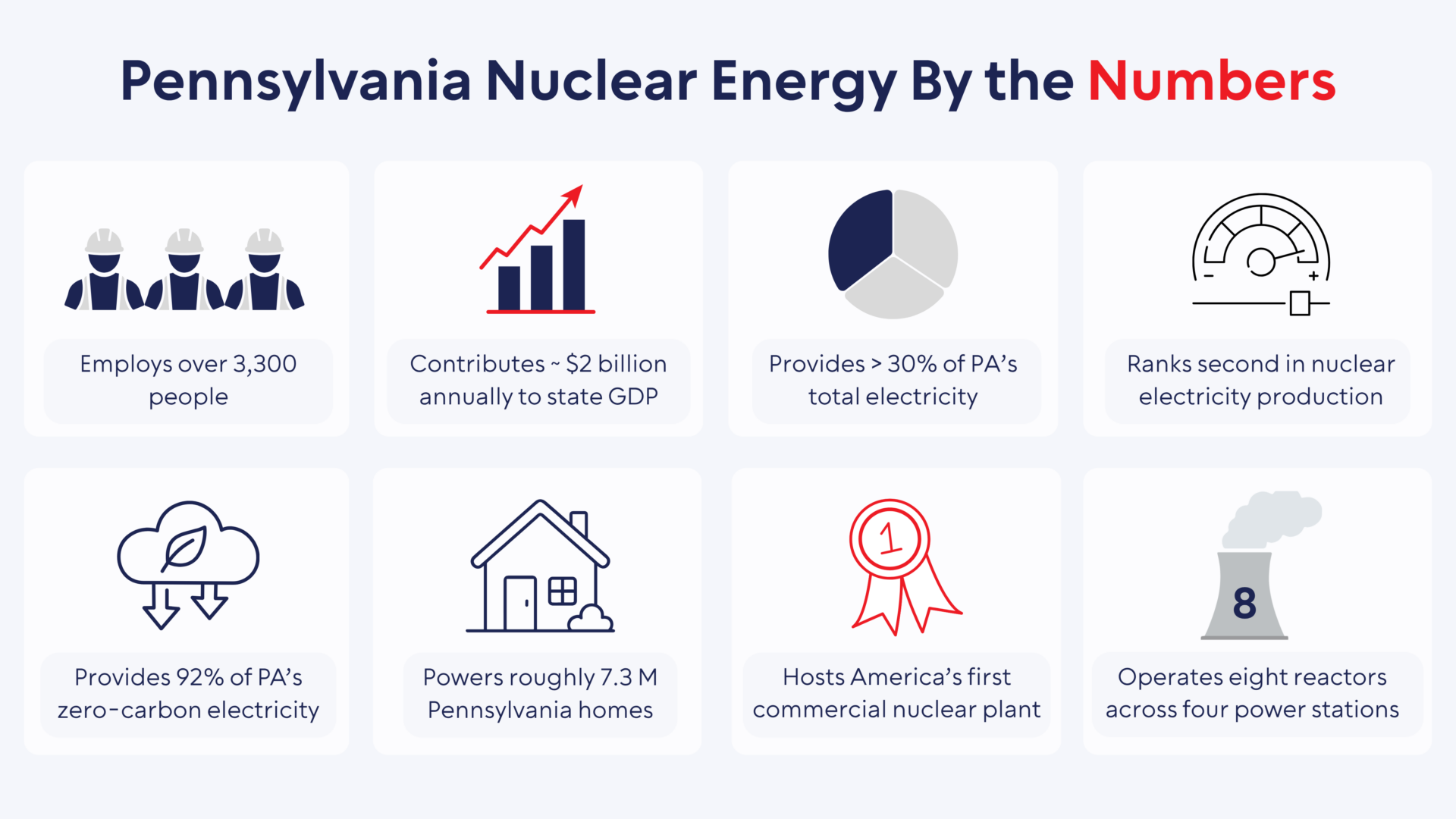
Integrating Nuclear Power with Digital Infrastructure
A growing number of technology companies are seeking long-term, carbon-free power arrangements to ensure reliable operations and meet sustainability goals. Pennsylvania’s nuclear infrastructure offers an established foundation for meeting this demand.
One approach involves locating major data centers near existing nuclear facilities, allowing them to draw directly from a constant energy source. This model reduces pressure on the broader grid, shortens development timelines, and signals to investors and regulators that Pennsylvania is prepared to accommodate advanced industries responsibly.
Another emerging application lies in nuclear-powered microgrids to support essential digital services, including hospitals, emergency operations centers, and research institutions. By pairing nuclear power with advanced digital management systems, Pennsylvania can enhance resilience during outages and cyber disruptions.
Economic and Talent Benefits Rooted in Communities
Nuclear energy delivers durable economic value to the communities that host it. Facilities operate on multi-decade timelines, supporting stable employment, predictable tax revenues, and long-term planning certainty for local governments. These attributes are especially important in rural and post-industrial regions where sustained economic anchors are limited.
Just as important, nuclear facilities support highly skilled talent and a broad supplier ecosystem. Operators, engineers, technicians, manufacturers, and service providers all benefit from long-term demand tied to plant operations and modernization. When paired with local education and training institutions, nuclear assets create clear pathways into family-sustaining careers that remain rooted in place rather than shifting with short-term market cycles.
Case Study: Lessons Learned from Other States
Other States are already demonstrating how nuclear energy can support digital growth and industrial modernization when firm power is aligned with emerging demand. In Louisiana, state agencies, utilities, and technology firms have coordinated the siting of large-scale data centers alongside dispatchable generation, integrating power planning into early permitting and community engagement. This approach has reduced delays while securing local benefits, talent commitments, and long-term tax investment.[1]
In Idaho, a different but complementary model has emerged. At the Idaho National Laboratory, microreactor technologies are being developed and demonstrated with federal agencies, universities, and private industry to support industrial and security applications. INL also serves as a national hub for supplier engagement, component testing, and early manufacturing validation, allowing firms across the country to participate in nuclear deployment without hosting reactors themselves. These efforts show how smaller, flexible nuclear systems can deliver reliable power for next-generation digital and industrial uses.[2]
Pennsylvania is well-positioned to adapt and extend these lessons. With one of the nation’s largest operating nuclear fleets, a deeply experienced workforce, and long-standing regulatory expertise, the commonwealth can align energy policy and economic development to reduce uncertainty and attract investment without compromising safety or oversight. By engaging national institutions such as INL as partners in supplier qualification, testing, and talent development, Pennsylvania can connect its industrial base directly to national nuclear deployment efforts. By pairing coordinated planning, applied partnerships, and deliberate community engagement, Pennsylvania can position its nuclear assets as platforms for innovation, economic resilience, and long-term competitiveness.[3][4][5]
[1] Louisiana Economic Development, “Digital Infrastructure and Energy Coordination in Louisiana” (2022); U.S. Department of Energy, “Data Centers and Clean, Firm Power Integration” (2023).
[2] Idaho National Laboratory, “Microreactor Program Overview” (2022); U.S. Department of Energy, “Demonstration of Microreactors for Remote, Industrial, and Security Applications” (2023).
[3] Nuclear Energy Institute, “Nuclear Energy in Pennsylvania: Economic and Employment Impact” (2023).
[4] National Academies of Sciences, Engineering, and Medicine, “Accelerating Decarbonization of the U.S. Energy System” (2021); Department of Homeland Security, “Cybersecurity and Infrastructure Protection in Energy Systems” (2022).
[5] International Energy Agency, “Nuclear Power in a Clean Energy System” (2022); World Economic Forum, “The Role of Firm Power in Digital Infrastructure and Economic Resilience” (2023).
◄ Nuclear Power for a Resilient Grid and Economy | Phased Roadmap Timeline with Milestones ►